How to Measure Your Foot for Shoes
Buying shoes from a brand or country you have never bought from before is one of the easiest ways to end up with a pair that does not fit. The single most reliable way to land your size is to measure the length of your foot in centimetres or inches, then convert that measurement into whichever sizing system the seller uses.
This guide walks through the measurement in three steps, then plugs the result straight into the converter so you can read off your size in every system at once.
Step-by-step measurement guide
- Place your foot on a piece of paper and trace the outline with a pen held vertically.
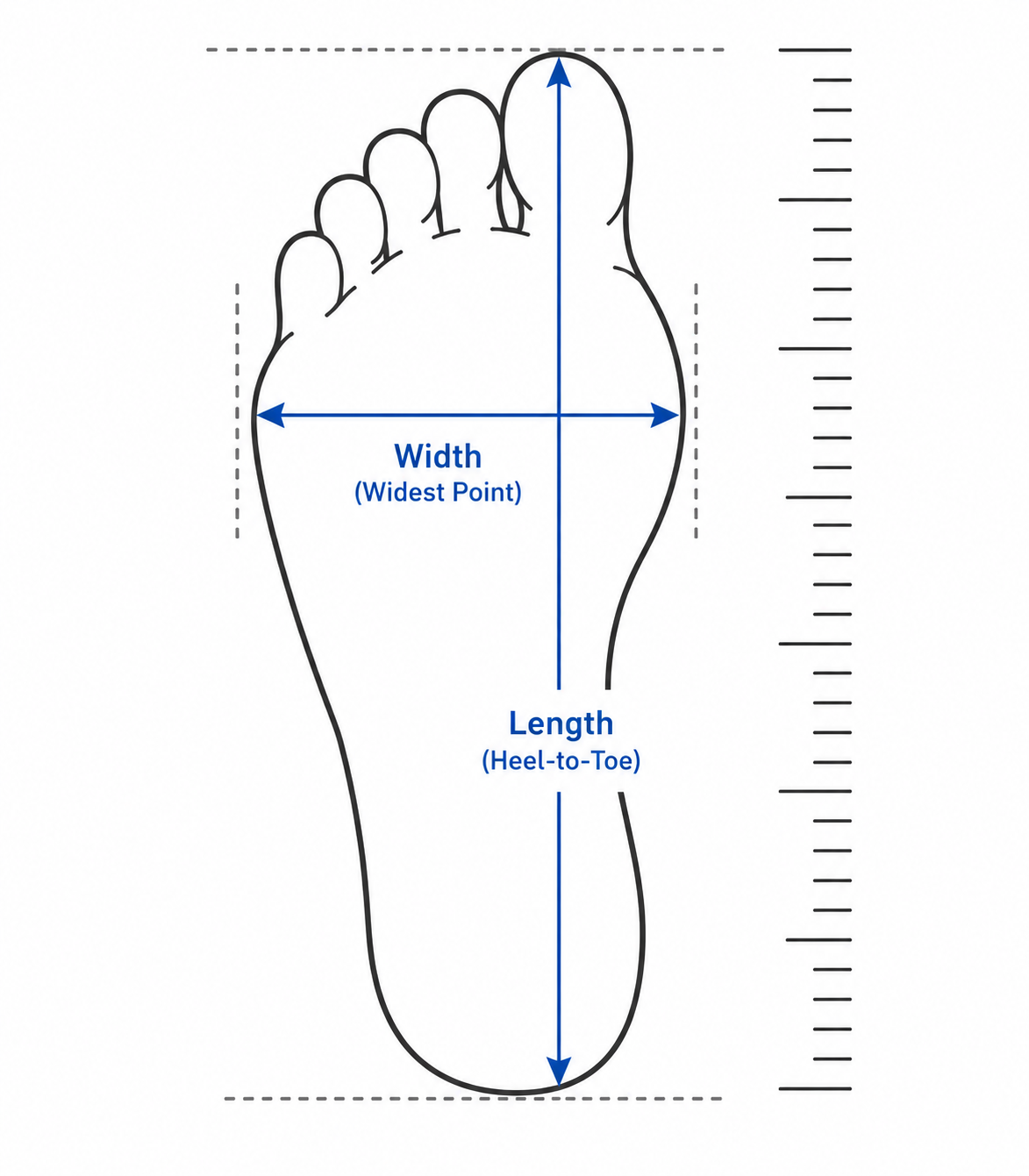
- Measure the longest point - from the back of the heel to the tip of the longest toe - in centimetres or inches.
- Enter the larger of your left and right measurements into the converter above to see your size in every system.
Practical tips
- Measure both feet - they are often slightly different.
- Measure in the evening - feet swell slightly throughout the day.
- Wear the socks you would normally wear with the shoe.
- Stand while measuring - the foot lengthens when bearing weight.
Convert your measurement
The converter below is pre-set to accept foot length in centimetres. Switch the input to inches or millimetres if that is what you measured.
| System | US / CA | UK | EU | AU | JP (cm) | KR (mm) | CN | MX | Foot (cm) | Foot (in) |
|---|---|---|---|---|---|---|---|---|---|---|
| Select a size above to see equivalents | ||||||||||
Sizes are approximate and may vary by brand. Check the manufacturer's size chart before buying.
Foot length reference table
Quick lookup if you already know your foot length in centimetres. Women's and men's tables shown separately because the same foot length maps to different US sizes for each.
Women's foot length to shoe size
| Foot (cm) | Foot (in) | US | UK | EU |
|---|---|---|---|---|
| 21.0 | 8.27 | 4 | 2 | 34 |
| 21.3 | 8.39 | 4.5 | 2.5 | 34-35 |
| 21.6 | 8.50 | 5 | 3 | 35 |
| 22.0 | 8.66 | 5.5 | 3.5 | 35-36 |
| 22.5 | 8.86 | 6 | 4 | 36 |
| 22.9 | 9.02 | 6.5 | 4.5 | 36-37 |
| 23.3 | 9.17 | 7 | 5 | 37 |
| 23.7 | 9.33 | 7.5 | 5.5 | 37-38 |
| 24.1 | 9.49 | 8 | 6 | 38 |
| 24.5 | 9.65 | 8.5 | 6.5 | 38-39 |
| 25.0 | 9.84 | 9 | 7 | 39 |
| 25.4 | 10.00 | 9.5 | 7.5 | 39-40 |
| 25.9 | 10.20 | 10 | 8 | 40 |
| 26.2 | 10.31 | 10.5 | 8.5 | 40-41 |
| 26.7 | 10.51 | 11 | 9 | 41 |
| 27.1 | 10.67 | 11.5 | 9.5 | 41-42 |
| 27.6 | 10.87 | 12 | 10 | 42 |
Men's foot length to shoe size
| Foot (cm) | Foot (in) | US | UK | EU |
|---|---|---|---|---|
| 23.5 | 9.25 | 6 | 5.5 | 38-39 |
| 23.8 | 9.37 | 6.5 | 6 | 39 |
| 24.1 | 9.49 | 7 | 6.5 | 39-40 |
| 24.5 | 9.65 | 7.5 | 7 | 40 |
| 25.0 | 9.84 | 8 | 7.5 | 40-41 |
| 25.4 | 10.00 | 8.5 | 8 | 41 |
| 25.7 | 10.12 | 9 | 8.5 | 41-42 |
| 26.0 | 10.24 | 9.5 | 9 | 42 |
| 26.5 | 10.43 | 10 | 9.5 | 42-43 |
| 27.0 | 10.63 | 10.5 | 10 | 43 |
| 27.3 | 10.75 | 11 | 10.5 | 43-44 |
| 27.9 | 10.98 | 11.5 | 11 | 44 |
| 28.3 | 11.14 | 12 | 11.5 | 44-45 |
| 28.6 | 11.26 | 12.5 | 12 | 45 |
| 29.2 | 11.50 | 13 | 12.5 | 45-46 |
| 30.0 | 11.81 | 14 | 13.5 | 47 |
| 30.8 | 12.13 | 15 | 14.5 | 48 |
When and how often to measure
Timing matters more than most people expect. Feet are at their smallest first thing in the morning and gradually expand through the day as you stand, walk and warm up. By late afternoon or evening they can be noticeably larger, so a measurement taken then reflects the size your feet spend most of their active hours at. Measure both feet rather than assuming they match — it is normal for one to be a few millimetres longer than the other — and always size to the larger of the two. A shoe that fits the bigger foot can be snugged up with lacing or an insole, whereas one sized to the smaller foot will pinch on the other side.
Your feet are not fixed for life, either. Ligaments loosen with age, weight changes alter the spread of the foot, and pregnancy can permanently increase length and width. For these reasons it is worth re-measuring roughly once a year, and certainly before any major shoe purchase or after a significant change in body weight or activity level. Relying on the size you wore five years ago is one of the most common reasons a confidently ordered pair arrives feeling a full size out.
Turning your measurement into a shoe size
Once you have a number in centimetres, the conversion itself is simple: foot length in centimetres is the universal anchor that every sizing system is built around. Find your measurement in the foot-length column of the charts above (or type it into the converter) and read across to the system the retailer uses. This is also why Japanese sizes look so familiar — a JP size is simply your foot length in centimetres, while Korean sizes express the same figure in millimetres. The same logic explains the gap between US men's and women's sizing, where a US women's size sits roughly 1.5 sizes above the US men's number for the same foot.
Do not size to your bare foot length, though. Add a wearing allowance of roughly 1 to 1.5 cm — about a thumb's width — beyond your longest toe so your foot has room to move forward as you walk or run. If your measurement lands neatly on a chart row, that is your size. If it falls between two rows, size up rather than down: a slightly roomy shoe can be adjusted, but a short one cannot. Remember that these figures are approximate — lasts vary between brands and even between models from the same brand — so always sanity-check against the manufacturer's own chart before ordering.
Measure width, not just length
Length gets all the attention, but width is just as important for a comfortable fit and is the reason two people who wear the same length can find the same shoe feels completely different. To measure it, wrap a soft tape measure around the widest part of the foot — across the ball, where the base of your big toe and little toe sit — keeping the tape snug but not tight. Note the circumference in centimetres alongside your length. As with length, measure both feet in the evening and work from the larger figure.
A foot that is wider than average will feel cramped in a standard-width shoe even when the length is spot on, leading to rubbing, bunions and numb toes; a narrow foot in a wide shoe slides around and blisters. Many brands publish their shoes in width grades for exactly this reason, so knowing your width lets you pick the right grade instead of compensating by going up a length you do not need. For the full method and how the common width grades line up across systems, see our dedicated width guide before you settle on a size.
Frequently asked questions
Should I measure my foot in the morning or evening?
Measure in the evening. Feet swell slightly over the course of the day, so an evening measurement gives the size that will be comfortable when you are actually wearing the shoes.
What if my feet are different sizes?
Use the larger of the two measurements. Most people have one foot slightly bigger than the other, and shoes that fit the larger foot can be adjusted with insoles or lacing for the smaller one.
How do I convert foot length in inches to a shoe size?
Enter your inch measurement directly into the converter above - or multiply by 2.54 to get centimetres first, then look up that value in the reference table.
How much toe room should a shoe have?
Leave roughly 1 to 1.5 cm of space - about a thumb's width - between the end of your longest toe and the front of the shoe. That gap lets your foot slide forward as you walk or run without your toes hitting the toe box. If you measured your bare foot, add this allowance before you pick a size rather than buying a shoe that matches your foot length exactly.
Should I size up if I am between sizes?
Yes - when your foot length falls between two rows in the chart, choose the larger size. You can take up a little extra room with thicker socks or an insole, but a shoe that is too short cramps your toes and cannot be fixed. Sizing up is especially sensible for running shoes, where feet swell during exercise.
Sizes are approximate and may vary by brand. Check the manufacturer's size chart before buying.